
Relieved and Grateful
And continuing to DARE to fight cancer

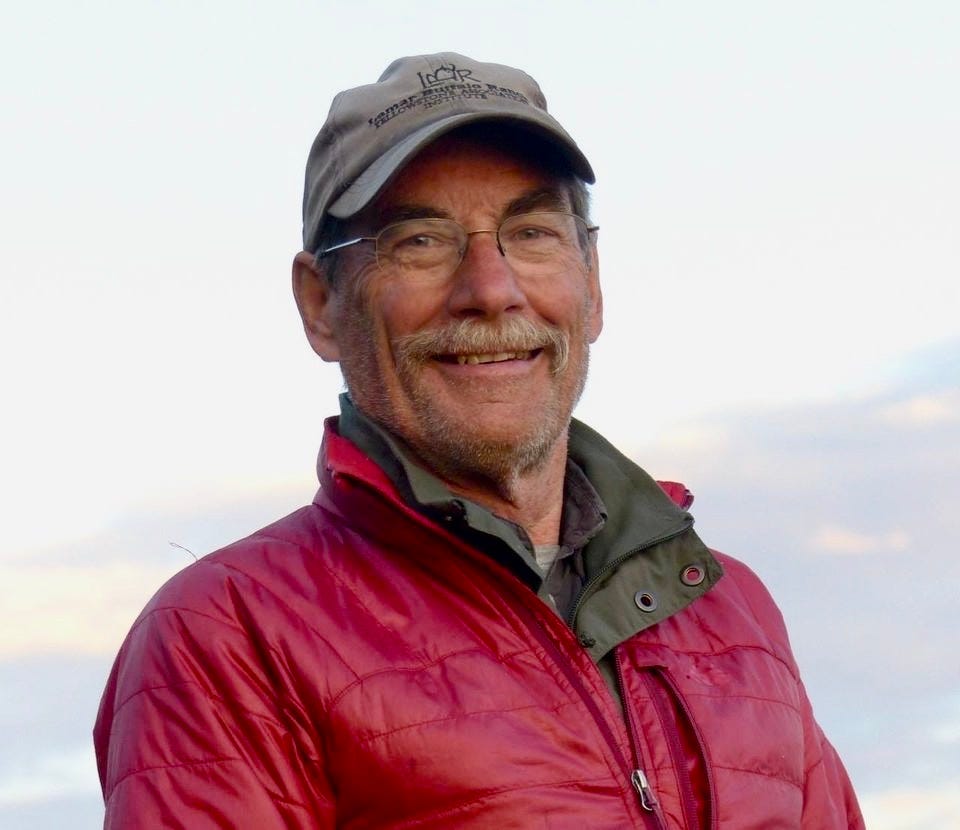
I’m relieved. And grateful. As I described in my last post, a two and a half year post-treatment follow-up was looming. I worried that the bloodwork might show that my aggressive prostate cancer was alive and well. I’m happy to tell you that the bloodwork showed no evidence of cancer activity. Indeed, it showed that my aging body is healthy.
I’m grateful for all the support I received after that last post. My thanks to each of you who shared supportive thoughts and feelings, as well as stories of your own experience with cancer. Your support helps me keep going.
So, I’m good for another six months, until the next follow-up looms and the worry probably returns. Meanwhile, I’ll return to how I’ve been battling cancer for the last three years. I’ll keep following what I call my DARE approach. This approach was months in the making and, oddly enough, built on a decade of experience as a full-time advocate in the fight to protect wolves and bison. My advocating ended a short while before I was diagnosed.
To do what comes naturally, to sustain or increase their population, these wild critters need territory that provides room to reproduce and food for their pregnant bodies and young ones. But wolves in the West are kept from needed territory by being viewed as vermin or looters to be shot, poisoned, or trapped. Yellowstone’s bison, natural migrators, are hazed back into the park or shot as they leave because they are seen as hungry intruders that would eat the grass cattle need. Wolves and bison struggle to survive because of this conflict with us territory-hungry humans who claim wild lands and are unwilling to share.
Just like wolves and bison, prostate cancer cells need food, such as testosterone and insulin produced by sugar spikes, to sustain or grow their population. Like wolves and bison, these tiny critters could disperse to find what they need. They could migrate from my radiated and wrecked prostate to better territory: my lymph nodes, liver, lungs, or bones. If they spread, a cure is unlikely, though there is exciting research on emerging treatments to control and manage symptoms and pain for varying lengths of time after prostate cancer has spread.
I decided that I needed to make sure my cancer cells couldn’t eat, reproduce, or migrate. Conventional medical treatment was the first step. Forty-four shots of radiation could kill them, and eighteen months of hormone therapy could starve the survivors. But I wasn’t sure that treatment would get them all. So my job would be to make sure that the tough little survivors did not find what they needed to increase their population.
Viewing my cancer cells as wildlife led me to create an overarching goal: I would make my body a hostile environment for prostate cancer cells and a haven for healthy cells. I would filter all my thoughts, feelings, and actions through that goal. I could achieve this goal by committing to diet, attitude, rest, and exercise, the four components of what I came to call our DARE approach.
While research convinced me that exercise, the E in DARE, was essential to a proactive approach to fighting cancer, I started slow and easy, not pushing for personal bests. For a guy my age, this was not about striving for speed; this was about filling a need. I needed to get my aging body in the best shape possible, not just to fight but to beat cancer. I was glad my radiation oncologist had no concerns when I described my exercise plans, which included skiing, hiking, indoor cycling, and strength workouts. He smiled and said he wished more of his patients took such an active approach.
Mary researched, designed, and fed us a plant-based diet, the D in DARE. I did not doubt that the diet would sustain my body while I exercised. Research said it would also deprive my cancer cells of some necessary nourishment—especially sugar spikes. The weaker they became, the happier I would be.
While cancer changed how I fed and exercised my body, it also invaded my dreams and rest, the R. One night, my dream-induced struggling and grunting roused Mary. Sliding close and wrapping her arms around me, she asked if I wanted to discuss the dream. I said I didn’t recall many details, but I felt that this dream, like the one the night before, was cancer-inspired. In both dreams, some bad people were trying to capture me and take me to a place I didn’t want to go. I fought them and kept yelling, “I’m not going to let you win!”
Whatever challenges I faced, asleep or awake, I was glad that I had adopted an attitude, the A, of being ready and willing to fight. As supportive friends had reminded me, I needed to be myself. I needed to go deep into this journey into the wilds of cancer, just as I had always immersed myself in whatever interested me: Yellowstone, wildlife advocacy, bike touring, backcountry hiking, writing, photography, and now our DARE approach to fighting—and hopefully beating—cancer.
Now, two and a half years since treatment ended, I still adhere to DARE. When I find myself drooling over some chocolate chip cookies, for example, I remind myself that the sugar in them would trigger an insulin spike, creating a friendly, not hostile, environment for cancer cells. When I don’t want to do my scheduled workout, I remind myself that missing the workout would make my body less of a hostile environment for cancer cells. When I feel bored with our plant-based diet, I remind myself that the diet makes my body a haven for healthy cells and a hostile environment for cancer cells. When I find myself saying I am too busy to sleep eight hours a night, I remind myself that my body needs a regular rest routine to recover.
While I hope my conventional treatment killed all the prostate cancer cells, I continue to treat my body as if there are some tough little survivors inside me. I continue to DARE to fight cancer.
So glad you have beat the invader. Thank you for all your advocacy for wolves and wildlife. My prayers are with you. God bless..🌀
Yay!!!